
The Day the Market Moved
On July 28, 2026, Ohio State announced JPMorganChase as its jersey patch partner in a deal reportedly worth as much as $17 million annually. A few hours later, Notre Dame answered with SoFi, six years and reportedly somewhere between $18 million and $20 million per year.
That may be as good a picture of modern college athletics as any. The sport no longer changes from decade to decade, or even season to season. It changes while everyone is still digesting the announcement from that morning. One school discovers a new piece of inventory, another finds a higher price for it, another watches and quietly begins asking what it owns that nobody has thought to sell yet.
The jersey itself is almost beside the point. Ohio State found $17 million of value on fabric that had previously been blank. Notre Dame found potentially more a few hours later. The interesting question is not whether every athletic department should now race to stitch another corporate mark onto its uniform.
The interesting question is: What other blank fabric is sitting inside college athletics right now? Because the answer is almost certainly not another square inch of cloth.
By dinner, the market had moved. By breakfast, everyone else was recalculating.
The Number Everyone Can See
For 2026–27, participating institutions can share approximately $21.3 million directly with their athletes under the post-House settlement model. It is a cap, not a mandate, but at the highest levels of college athletics that distinction may soon become academic. If the school recruiting against you is spending to the number, not getting there starts becoming a competitive decision of its own.
And here is where the new landscape becomes fascinating, and uncomfortable. Everyone can see the same number. Almost nobody begins from the same place.
USC can find money in ways many athletic departments cannot. So can Texas, Texas A&M, Ohio State and Alabama. They have generations of alumni wealth, donor cultures that have been cultivated for decades, national followings, enormous institutional brands and corporate relationships that exist partly because of who they already are. It is simply reality.
An athletic department cannot manufacture another century of alumni wealth. It cannot suddenly create Texas A&M's donor base. Rutgers cannot move to Austin. Oregon State cannot become Ohio State. A Group of Six program cannot gather its leadership team for a retreat on Friday and emerge Monday morning with SEC television economics.
The irony of this new system is that a common benchmark may actually expose the inequality of college athletics more clearly than ever before. One department may spend the year building toward $21.3 million. Another may treat it simply as the cost of opening the doors.
Same number. Completely different starting lines.
And if the industry's only response to that reality is raise more money, we already know how the story ends. The richest programs become richer, the deepest donor bases get asked for more, and everyone else spends an extraordinary amount of energy chasing a financial structure they did not inherit the resources to support as easily.
But that assumes the only thing an athletic department has to work with is money.
It isn't.
Three Patches, Three Reasons to Belong
Storytelling will not erase a resource gap, and a clever sponsorship campaign will not magically make one disappear. But an institution does control whether the things it does possess become more valuable because they are unmistakably its own.
And oddly enough, four square inches of fabric is beginning to show us what that looks like.
Wisconsin spent years resisting corporate marks on its uniforms before choosing Culver's as its first jersey patch partner for football, men's basketball and men's hockey. That choice works for reasons having very little to do with impressions. Culver's opened its first restaurant in Wisconsin in 1984, has worked with Wisconsin Athletics for more than twenty-five years, and the new relationship extends into athlete NIL and original content. Wisconsin's own deputy athletic director called Culver's “quintessentially Wisconsin,” and for once that familiar partnership language actually feels true.
Look at Ohio State through the same lens. Chase is a global financial institution, but in Columbus it is also profoundly local: roughly 18,000 employees in central Ohio, more than 155 years in the state, with foundational roots in Columbus itself, and more than 1,700 Buckeye alumni hired through its early-career pipeline in just the past five years. The partnership adds financial education and career programming for athletes, sponsorship of the new 1922 Club, and benefits for Chase cardholders. The patch is not the beginning of a relationship. It is the visible edge of one that was already there.
Notre Dame and SoFi found yet another version of the same idea. SoFi did not simply buy some of the most valuable fabric in college athletics... it attached the relationship to Notre Dame's existing 4 for Forever philosophy, establishing a $1.4 million annual fund supporting scholarships, financial education, career development, and opportunities across all 26 varsity sports. There is even a scholarship specifically for walk-on athletes and a financial-success hub designed around life beyond college. A financial-services company did not merely appear on Notre Dame's jersey. It found a role inside something Notre Dame had already decided it believed in.
Three patches. Three entirely different reasons to belong.
And this is where the scale of the Notre Dame agreement becomes something more than impressive. It becomes strategically consequential. At the reported upper end, the Irish found in one partnership nearly the equivalent of its entire annual revenue-sharing allowance. That changes the economics far beyond the patch itself. If one thoughtfully constructed partnership can absorb most of that annual pressure, the department's broader fundraising does not have to spend the year chasing the same $21.3 million problem.
Donor energy, philanthropic capital, and development attention can remain available for facilities, scholarships, Olympic sports, coaching, athlete development, and the countless other priorities that still determine whether an athletics department is actually getting stronger.
In that sense, the value of the right partnership is not merely the revenue it creates. It is the financial freedom it creates elsewhere.
One Mark, Sixteen Universities
Now consider the other direction. The Big 12's Monster Energy agreement places the same co-branded conference mark across football and men's and women's basketball at all sixteen schools, along with fields, courts, and conference branding, for a deal reportedly worth around $20 million annually, or roughly $1 million-plus per member. It is unquestionably an unprecedented piece of conference monetization, and schools remain free to sell separate school-specific jersey patches, should there even be much real estate left to work with afterward.
But the more interesting issue is not the economics. A conference-wide mark can tell a story about the Big 12. By definition, it cannot tell sixteen different stories about sixteen different universities.
The same Monster mark appears in Morgantown, Provo, Orlando, Stillwater, Boulder, and Fort Worth. Those places have different histories, economies, alumni cultures, traditions, and reasons people love them. There may be considerable monetary value in putting one mark across all of them, but there is far less identity in it.
Who will pay to sit beside our logo?
What does their logo beside ours say about us?
An Advantage Only You Can Own
Consider again Oregon State.
Oregon State does not need to become Ohio State. It needs to become, and remain, exceptionally valuable as Oregon State. The opportunity is to identify the company, athlete, moment, alumni community, or experience that could happen authentically in Corvallis and nowhere else, then make that more valuable.
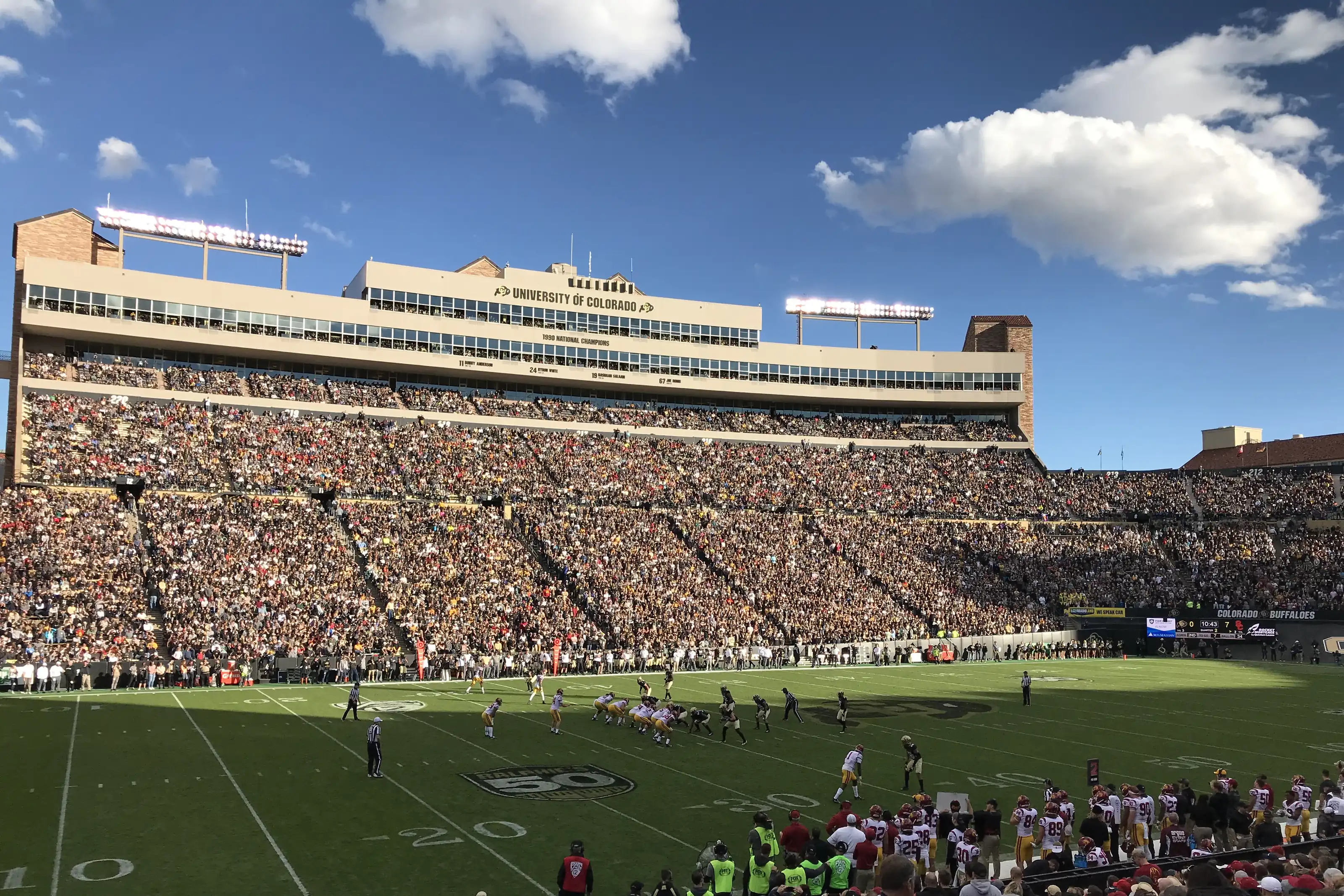
There is enormous power in being unmistakably, unapologetically, yourself.
Every university possesses some version of that opportunity: its geography, academic specialties, industries, traditions, alumni, rivalries, personalities, athletes and its particular way of seeing itself. The question is whether anyone has bothered to connect them. That means asking:
- Which companies fit our community so naturally that the partnership almost explains itself?
- Which athletes have stories, passions or ambitions that unlock those relationships?
- Which alumni are being treated only as donors when they could also be connectors, executives, customers, mentors or partners?
- Which moments on our calendar could belong to a partner in a way no other university could reproduce?
- Which corporate categories has our rights holder never explored through the particular lens of this institution?
- What have we stopped noticing simply because it has always been here?
That is the advantage no competitor can simply purchase, inherit, or imitate: the particular combination of place, history, people, culture, and identity that already belongs to the institution.
The real work is recognizing what that means, protecting it, and then finding the partners, athletes, moments, and stories capable of making it more valuable without making it less distinct.
And there is one more possibility that a marketplace moving this quickly does not naturally encourage:
Sometimes the Blank Space Is the Strategy
As of late August 2026, USC had not announced a school-specific jersey patch sponsor.
I do not think that absence should automatically be interpreted as an asset waiting impatiently to be monetized. It is entirely possible, perhaps even likely, that USC will eventually join the ranks of programs with a jersey patch partner. That is not the point. The question is whether, when that moment comes, the relationship feels like another piece of inventory sold, or something so fitting it seems as though it belonged there all along.
But look at the uniform itself. The interlocking SC, the Big Ten mark, the Nike Swoosh. Each already says something: institution, conference, heritage, relationship. USC and Nike just extended one of college athletics' longest running, and most storied, apparel partnerships another decade, through 2036. Adding a fourth for revenue alone does not elevate their brand value. It adds clutter, and it signals a program following a trend rather than setting one.
And, in fact, the Nike extension includes an NIL component. Select Trojans will sign individual partnerships with Nike through what USC is calling the Blue Ribbon Elite class. USC took a thirty-year relationship and extended it into athlete NIL rather than selling four new square inches to a new partner.
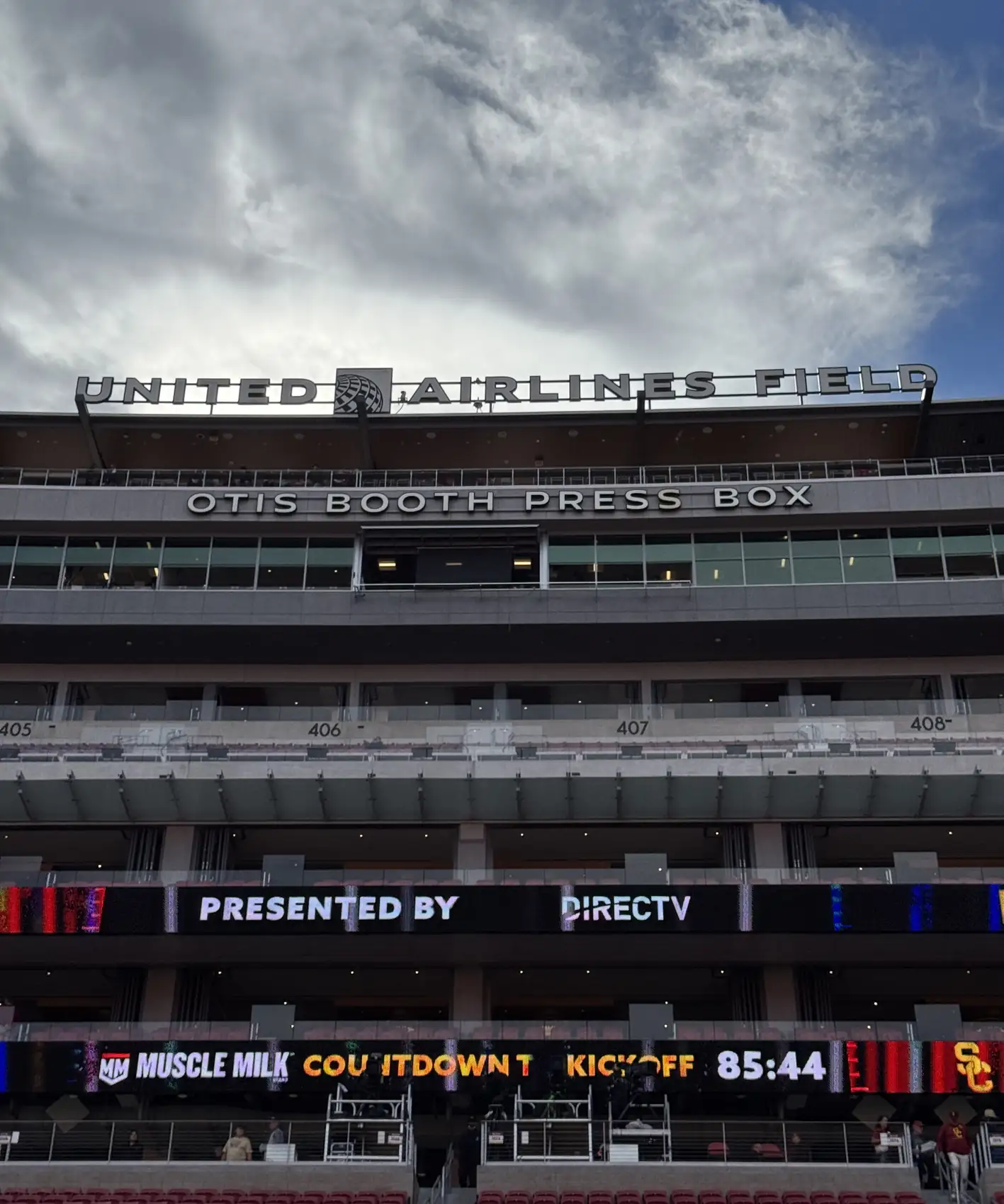
What deserves to sit beside those marks?
That is a very different question from what will someone pay us to put there?
And in a market repricing itself almost by the week, there is competitive logic in knowing the difference. Every scarce asset sold today is priced by today's market. Every long-term agreement commits tomorrow's brand to today's decision. A patch can generate millions, but once that space has been spoken for, the conversation changes from what could this become? to how do we make the most of what we already sold?
Sometimes moving first is an advantage. Sometimes knowing you do not have to is one too.
The blank space itself can carry meaning. It can signal that not every available inch has to become inventory simply because the industry discovered someone will buy it. And if the right partner eventually appears, one whose relationship with USC says something larger about Los Angeles, the university, its athletes or the particular place USC occupies in American culture, that patience may make the eventual partnership more valuable precisely because the space was not treated as interchangeable.
That is not an argument against jersey patches. Wisconsin, Ohio State and Notre Dame demonstrate exactly why the right one can work. It is an argument for discernment.
The question should not be whether a university is leaving money on the table. The question is whether accepting the money creates something more valuable than the asset it gives up. That means asking:
- Would this company still feel inevitable beside our mark six years from now?
- Would our alumni immediately understand why it belongs there?
- Would the athlete wearing it understand the relationship?
- Would a recruit see something that feels distinctly like us?
- And, most simply, would we still believe it belongs?
If those answers are difficult, perhaps the blank fabric is telling us something.
The institutions that cannot outspend their competitors do have every reason to out-create, out-connect and out-position them. The institutions that can outspend everybody should be doing exactly the same thing.
Because scale is an advantage. Identity is an asset. And restraint, occasionally, is part of protecting both.
The best partnership should not make a university look more like everyone else chasing revenue. It should make the university look even more like itself.
And perhaps that is what this entire jersey-patch moment is really testing. Not how quickly an athletic department can monetize what it owns, but how confidently it can protect what it means. This is brand stewardship under financial pressure: the discipline to preserve distinction while the market is putting a price on everything, and the foresight to ensure that every decision made for today's value leaves the brand more meaningful tomorrow.
What a Department Already Owns
There is a concern in allowing $21.3 million to become the strategy rather than the requirement.
Think about what already sits inside a major athletic department.
Hover over any asset to see what it connects to. The opportunity often lives in the intersections.
And moments that people organize entire weekends, and sometimes entire families, around.
Most businesses would spend decades trying to acquire even a fraction of that.
Yet college athletics has traditionally divided those assets into boxes. Development raises money. The rights holder sells sponsorship. Marketing sells tickets and engages fans. Content tells stories. NIL works with athletes. Alumni relations handles alumni. Recruiting recruits. Each does its job.
But the opportunity now may be found precisely in the spaces between those functions. And more importantly, how easily they can, and do, intersect.
An alumnus may also run a company. That company may belong naturally with an athlete whose interests nobody has bothered to ask about. That partnership may create an experience during a rivalry weekend. The experience may give donors something worth attending, fans something worth talking about, and the athlete something meaningful to build upon. The resulting story may travel through social media and land on the screen of a recruit 2,000 miles away.
No single piece of that chain is revolutionary. The connection is.
And that may be one of the most important changes in how we think about the modern athletic department. The next advantage will not necessarily come from finding another asset. It may come from realizing that the assets already there were never supposed to operate independently.
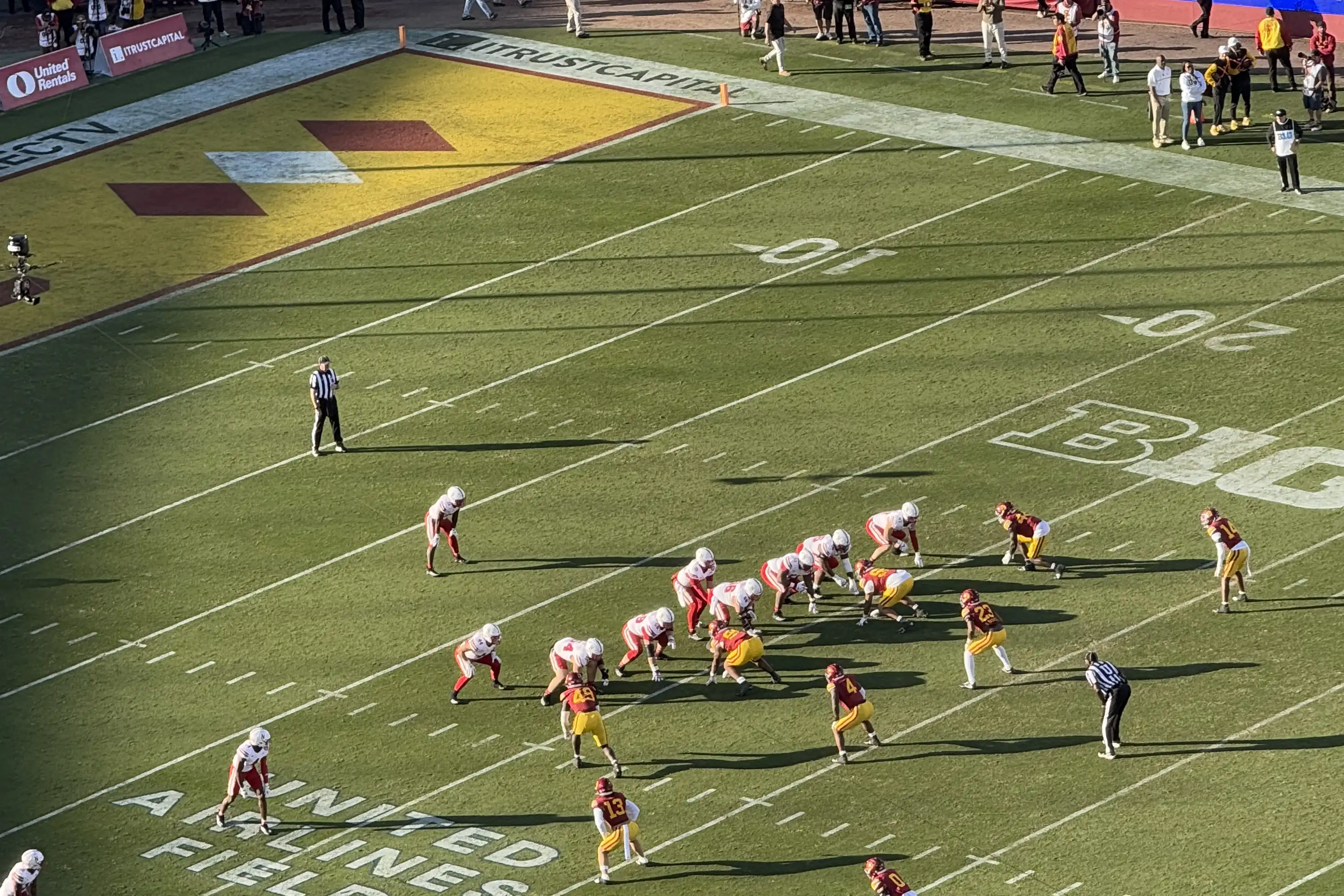
$21.3 million tells you what a department can spend. It tells you almost nothing about what it can build.
A Logo Is Not a Relationship
For decades, the formula was familiar. A company bought visibility. The logo appeared on signage. There was radio inventory, hospitality, a presenting sponsorship, perhaps some tickets and the inevitable announcement explaining how “thrilled” both sides were to begin the partnership.
There is still value in those things.
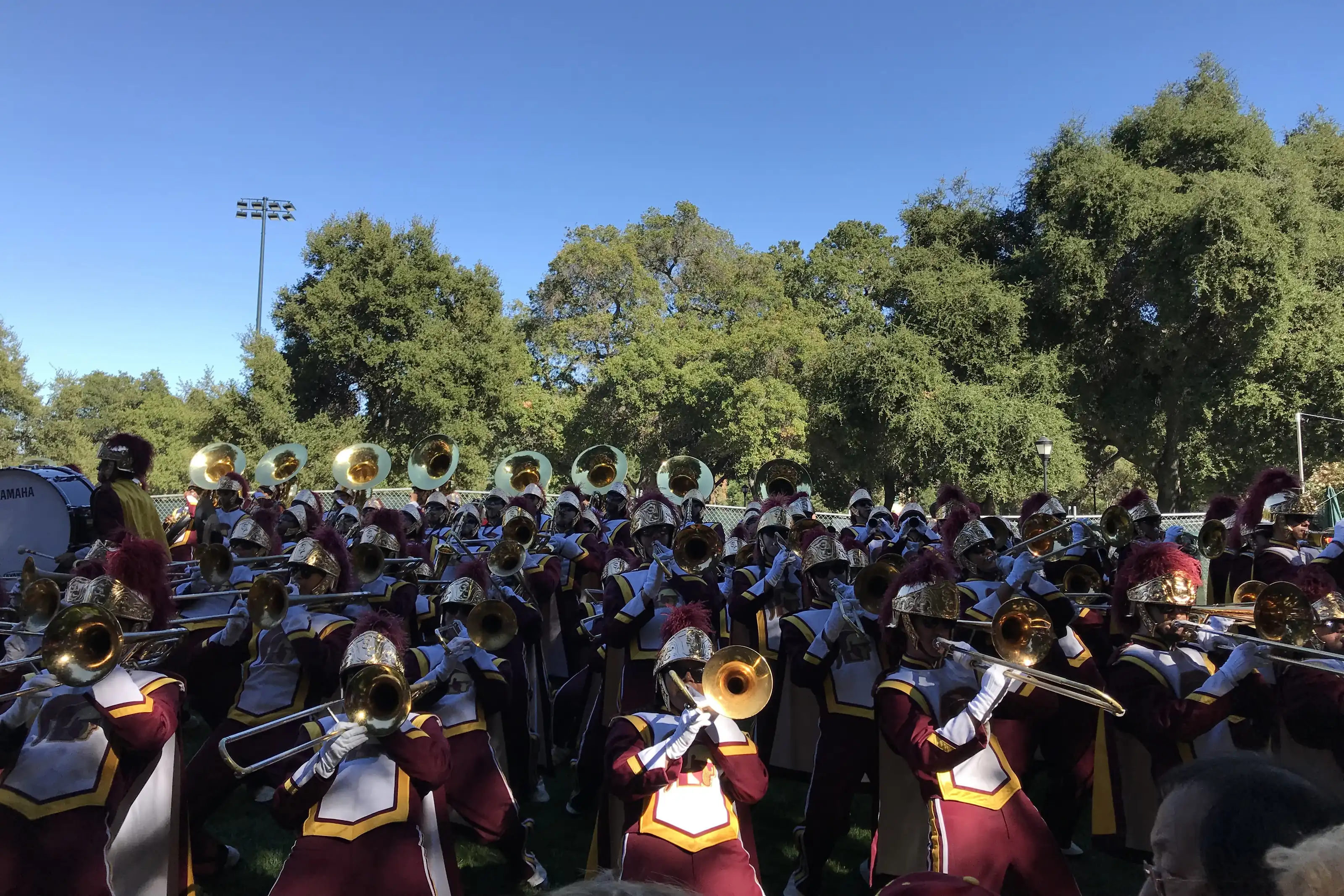
But a logo has no childhood.
It did not choose a major. It does not have a hometown, a family, a favorite place to travel, an entrepreneurial ambition or a career it wants to pursue after graduation.
An athlete does. That changes everything if we allow it to.
The starting question should no longer be which athlete has the most followers? It should be: why this athlete, why this brand, why this moment, and why should anybody in this university community care?
An athlete fascinated by aviation might give an airline a story it could never manufacture through signage. A business student with entrepreneurial ambitions can make a financial-services partnership about something more interesting than appearing in a commercial. An international athlete can create a natural bridge to a global company. An Olympic-sport athlete with an authentic interest in travel, wellness, design or culinary arts may introduce an entirely new category of consumer brand to collegiate athletics.
The point is not to manufacture an alignment because somebody has budget. It is to recognize the alignment that was already sitting there.
When that happens, the fan does something far more valuable than notice the sponsor. They understand the relationship. There is a small moment of recognition: Of course. That makes sense.
That may sound subtle, but subtlety is exactly what most sponsorship cannot buy. “That makes sense” becomes “that fits.” “That fits” creates trust. Trust creates affinity. And affinity is where a brand stops renting somebody else's audience and starts belonging inside the community.
The university brings scale. The company brings resources. The rights holder brings distribution. The athlete brings the humanity.
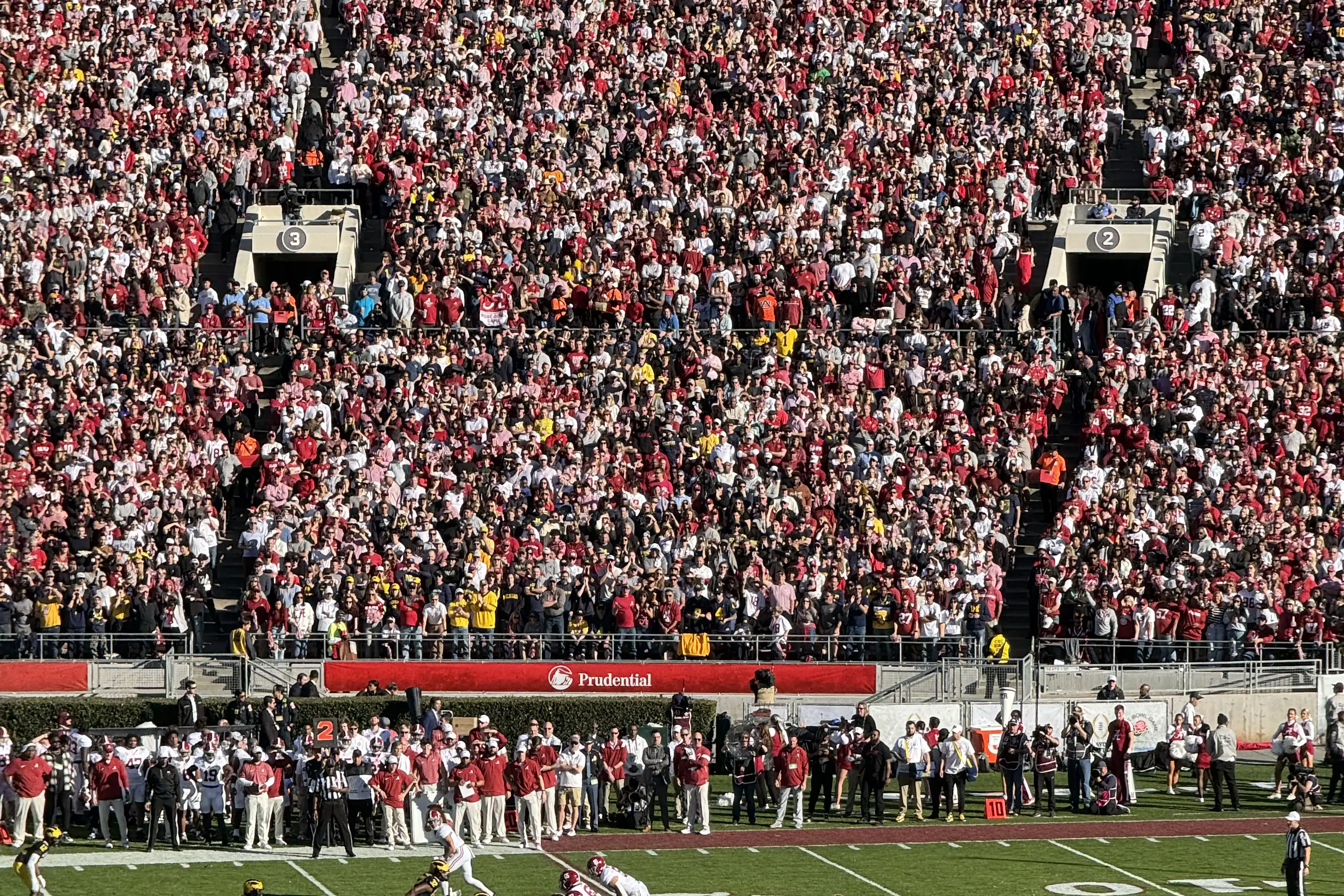
The fan leaves having received nothing tangible.
Impressions Are Not Experiences
The same thinking should extend to what happens after the whistle.
None of these is expensive. All of them are more effective than what is currently being sold. And they tier naturally across a community, which is the part most departments miss. The donor should receive access. The season ticket holder should receive something at the gate. The student should receive something worth telling other students about. The alumni watching from another time zone should receive something too, because most of any athletic community is not in the building on Saturday.
Somebody Still Has to Recognize the Idea
This is why the evolution of the multimedia rights model matters so much.
USC's new long-term relationship with Learfield is enlightening because it was not framed merely around selling more sponsorship. NIL, original content, fan engagement, data, brand relationships and new commercial opportunities increasingly sit inside the same conversation. The rights-holder model is becoming capable of connecting pieces of an athletics department that previously had little reason to sit at the same table.
That infrastructure is enormously powerful. It also raises the ceiling on what an idea has to be.
Learfield can bring a bank into the room. Or an airline. Or a hotel company. The university brings its name, audience and cultural relevance. The athlete brings a story. The sponsor brings resources.
Somebody still has to look at those ingredients and understand what they could become together. The real question is much more specific.
What could this brand become inside this university community that it could not authentically become anywhere else?
Alumni Fell in Love with a Feeling, Not a Funding Model
The same principle applies to donors and alumni, particularly as the cost of competing continues to climb.
There is a real concern in turning the people who love a university most into an annual solution to somebody else's spreadsheet. Alumni did not fall in love with their school because one day an athletics department might need them to help fund $21.3 million in athlete revenue sharing.
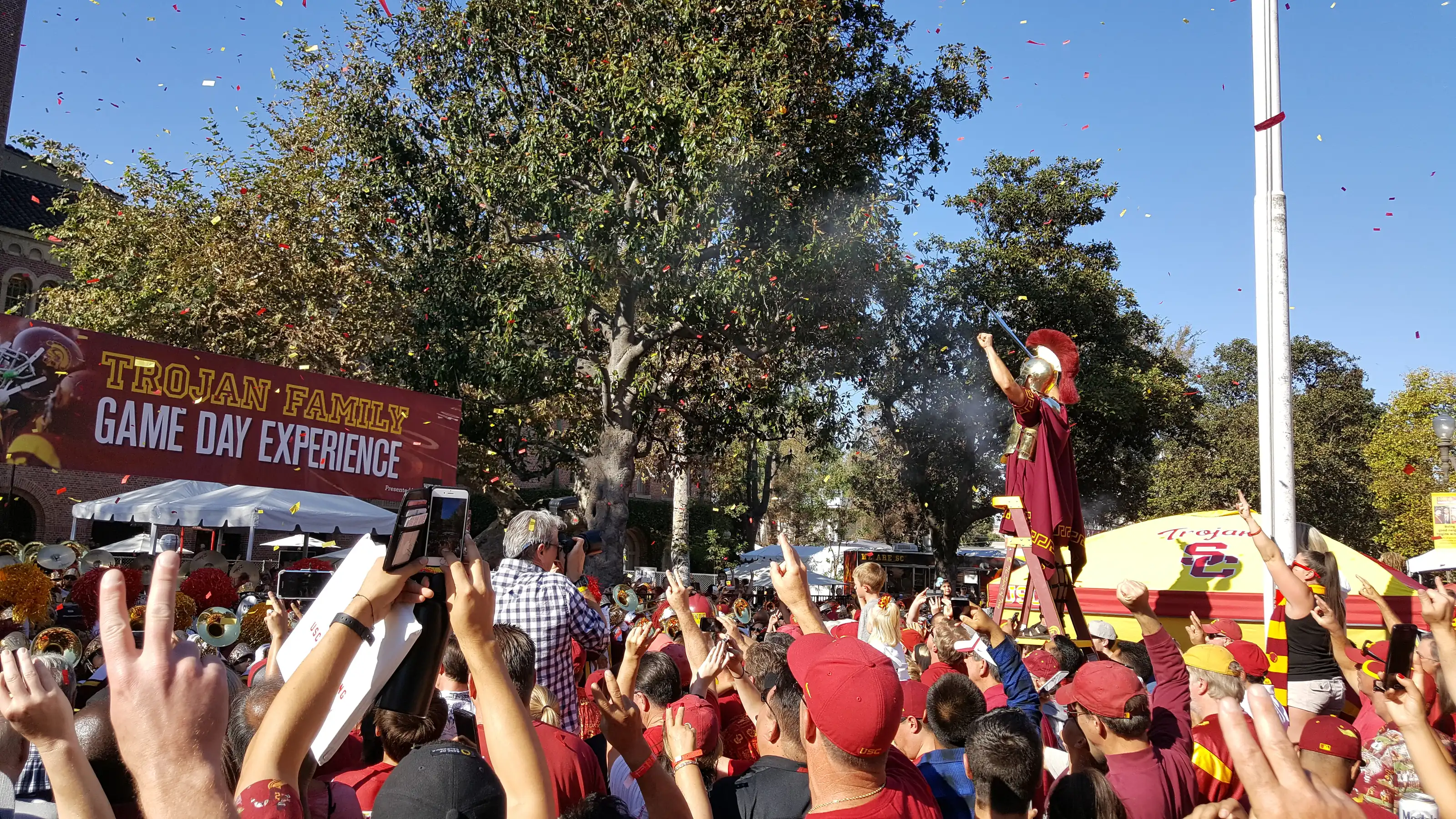
They fell in love with a feeling.
They fell in love with:
Start there. Then ask them to participate in what comes next.
That participation does not always have to begin with a check. An alumnus may run the company that should become the next partner. A donor may know the executive nobody has been able to reach. An alumni chapter may contain exactly the audience a sponsor wants to meet. A former athlete may mentor a current student-athlete. A game weekend could become a carefully designed intersection of athletes, companies, donors and alumni rather than another reception with name tags and passed hors d'oeuvres.
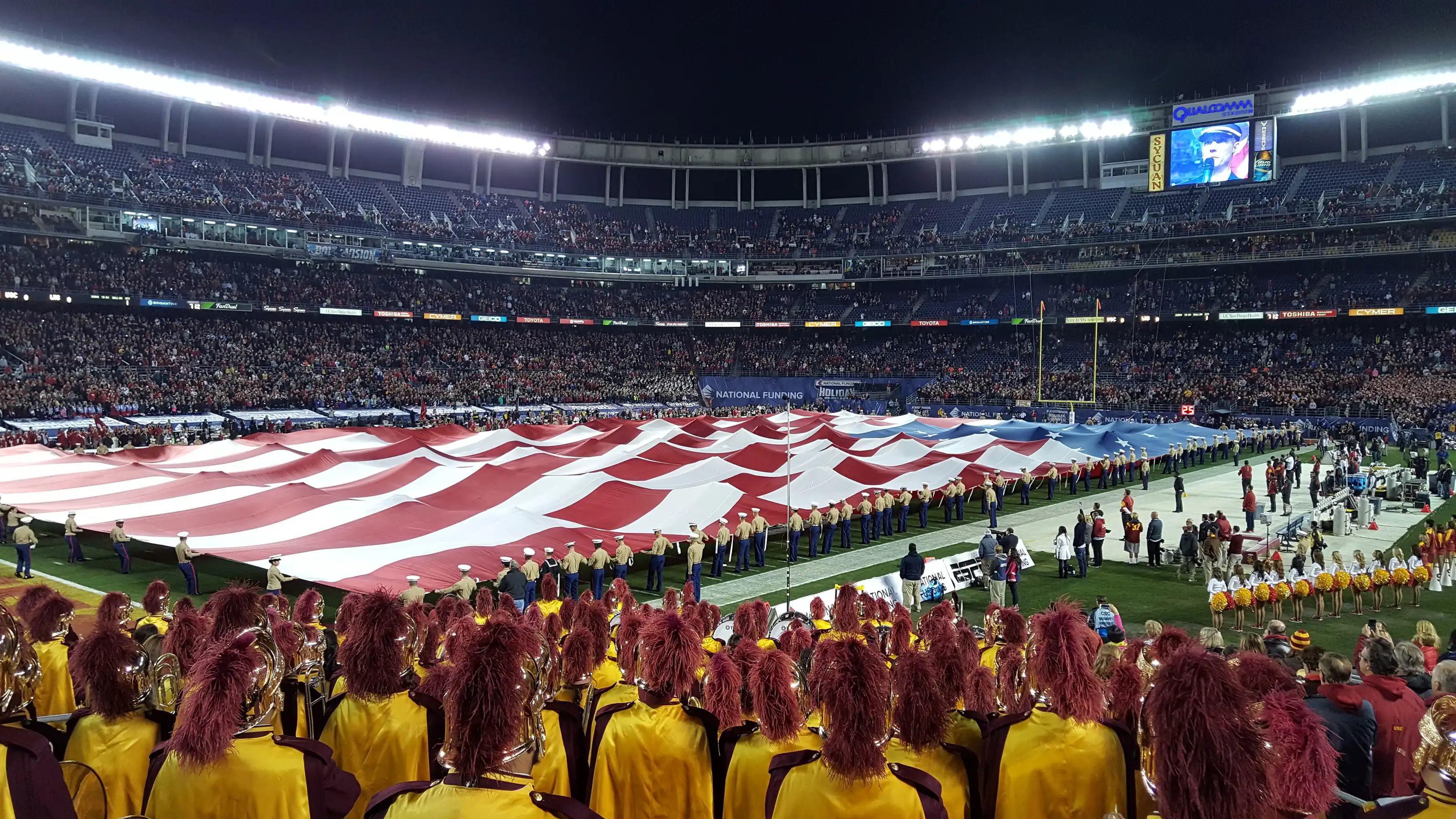
There is an enormous difference between asking a community repeatedly to finance the future, and inviting that community to build it.
And ironically, the latter may ultimately make the former easier.
When every interaction is an ask, people eventually begin to experience the institution transactionally. But when the companies surrounding the program create benefits, opportunities, access, experiences and stories that make people feel closer to the university, the relationship begins moving in the opposite direction.
“That Could Be Me”
There is another person watching all of this who will never appear in a sponsorship recap: the recruit.
Recruiting has always been an exercise in imagination. Walk through the tunnel. See the locker room. Hold the uniform. Look at the trophies. Look at the names of the athletes who went pro and imagine your own name beside them.
- The stadium says
- You could play here.
- The trophy case says
- You could win here.
- The alumni wall says
- You could go there.
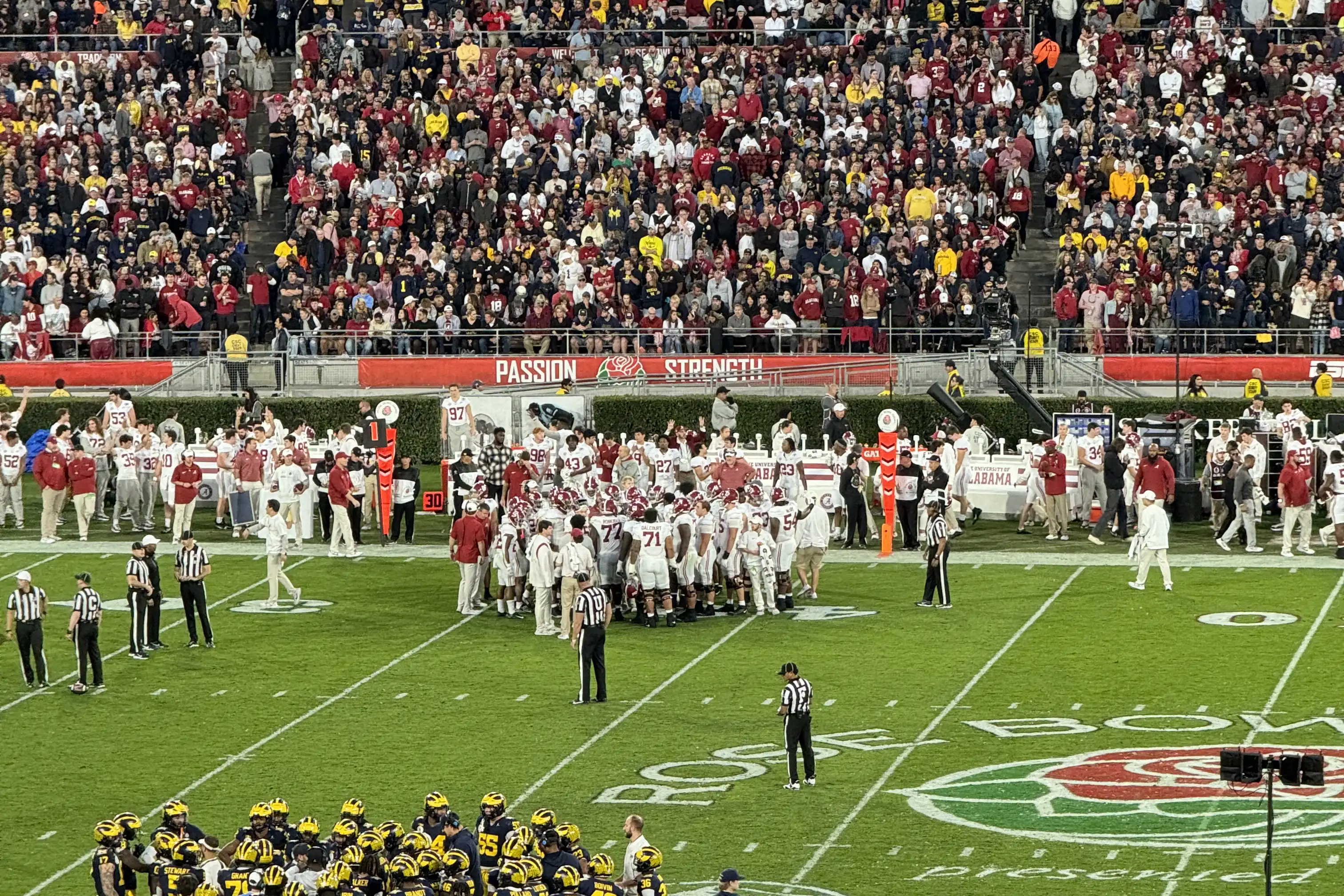
You could become something here.
The next generation of athletes can see which companies surround a program, whether its athletes are understood beyond statistics, whether their interests can lead somewhere, whether alumni relationships open doors, and whether the city, culture and corporate community surrounding one university create a life that feels meaningfully different from the school recruiting against it.
Most importantly, they can see somebody already living it. No brochure has to say it. No coach has to promise it.
A seventeen-year-old sees an athlete whose story has been understood, whose interests have become relationships and whose platform has grown beyond Saturday afternoon, and thinks: that could be me. Because great recruiting has never just shown athletes what they can receive. It shows them who they might become.
The New Scoreboard
College athletics will always be decided on fields and courts. Thank goodness. But the competition no longer ends when the clock hits zero.
There is another game being played now in athletic directors' offices, development meetings, rights-holder conversations, content studios, alumni communities and corporate boardrooms. It is a game of resources, certainly, but increasingly one of speed, imagination, judgment and the ability to recognize value sitting in plain sight before somebody else does.
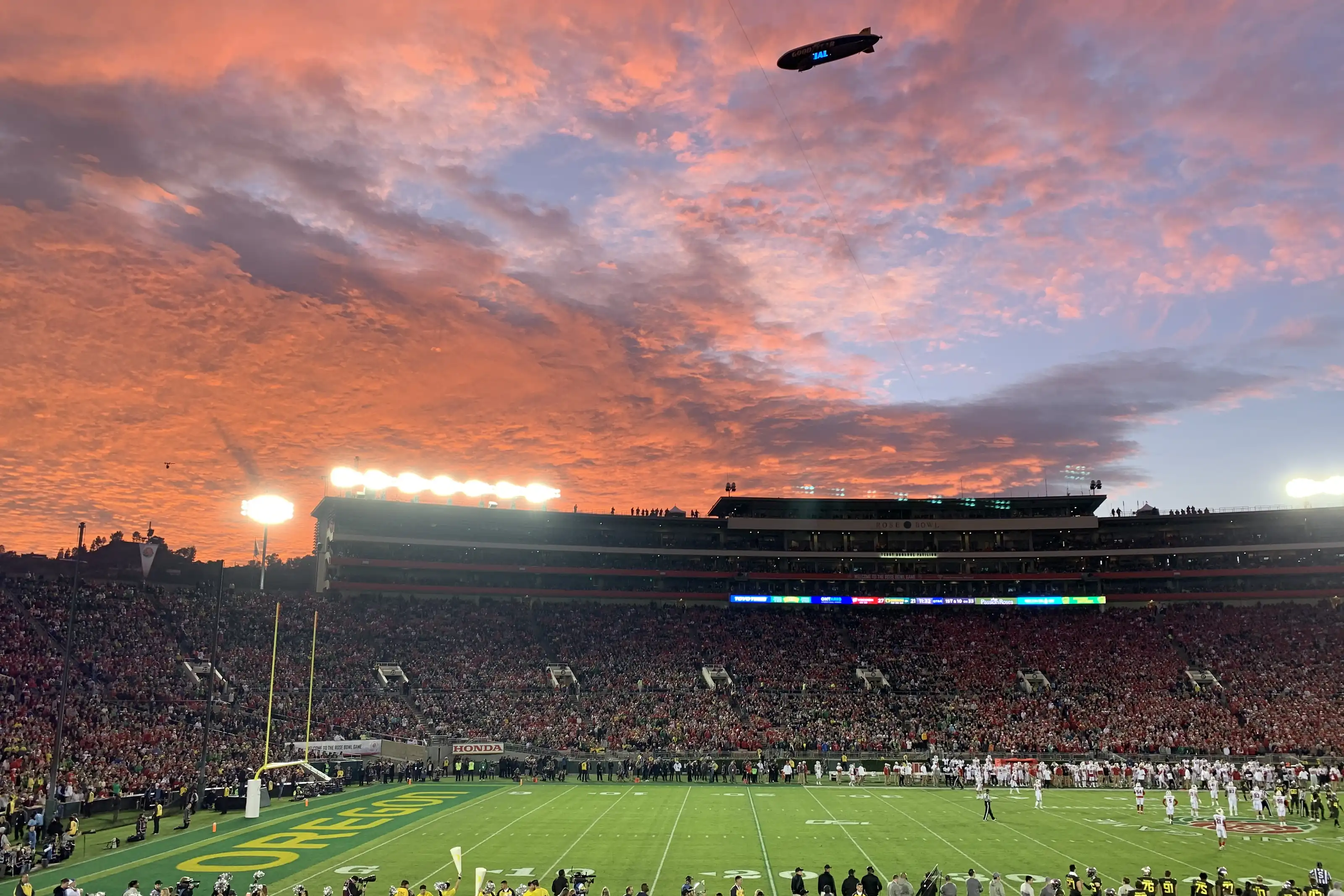
Meaning behaves differently.
Ohio State found $17 million on a jersey. Notre Dame found potentially $20 million. The obvious reaction is to look for the next jersey.
The more interesting reaction is to ask what else we have been looking at for years without actually seeing.
Maybe the blank fabric is an athlete whose story nobody has asked about. Maybe it is an alumni community contacted every year for money but never for imagination. Maybe it is an existing sponsor still trapped on signage when its relationship could touch thousands of people in a meaningful way. Maybe it is a corporate category that has never been invited into college athletics because everyone has been calling the same brands. Maybe it is an identity so familiar inside the university that nobody realizes how valuable it looks from outside.
That is the opportunity sitting beyond $21.3 million.
The wealthy programs will continue to have advantages. That will not change, and pretending otherwise does nobody any favors. But the next great divide in college athletics may be more interesting than simply cash flows, because that divide already exists.
The right athlete, connected with the right company, around the right story, at the right moment, in a way that makes alumni, donors, fans and recruits look at it and immediately think yes, that belongs here... that is considerably harder to copy.
And perhaps that is the real advantage hiding inside this entire new era.
Because in the end, the next advantage may not belong to the program with the greatest financial firepower or resources. It may belong to the one that understands how to turn all of that strength into something larger:
Reporting on the agreements described here draws on announcements from the institutions and their multimedia rights partners, and on coverage by ESPN, Sports Business Journal, Front Office Sports and On3. Figures reported as ranges are reported as such. Positions are current as of late August 2026, in a market that has repriced itself several times this year.